


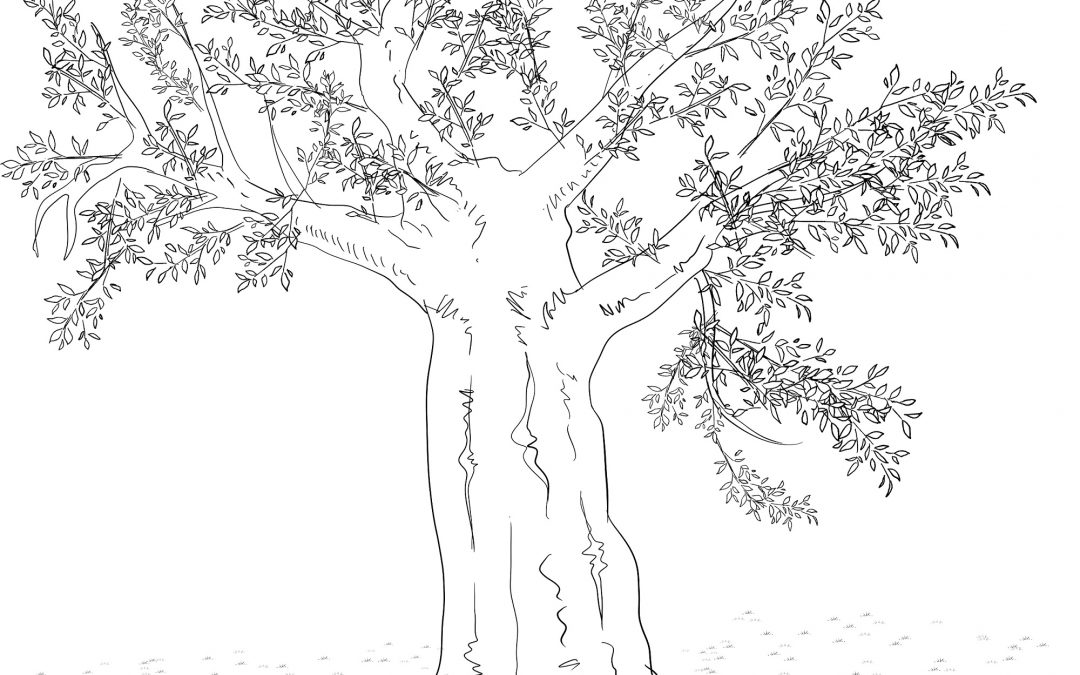
While walking through an olive grove, it is possible to see something characteristic: some trees have only one trunk, but other trees have several stumps, suggesting that between two and five smaller trees branch off from a trunk that has been cut at the base. Botanical books explain that the olive tree basically never dies. Indeed, from the cut stump, new trunks can emerge, from two to five. They are absolutely the same olive tree but REGENERATED!
When the Romans destroyed Jerusalem, they wanted to cut down all the olive trees. However, they were unable to uproot them because new trees grew from the trunks. The olive tree is therefore, by analogy, a symbol of regeneration. Perhaps this is why the oil, which is its product, is used in Baptism, Confirmation and the anointing of the sick. The Messiah, in Israel, was the Lord’s anointed one. All these are profoundly and spiritually regenerative events.
Finally, after the flood, Noah frees a dove that returns carrying an olive branch in its beak: the olive tree was the first plant to regenerate after the rain had stopped. Perhaps this is why we think of the olive tree in terms of strength and energy. In this blog we think of the religious movement of the laity as a regenerative element, as a new flow of energy which may, with the grace of God, contribute to the mission of the Church and infuse it with new vigor.